Abstract
War is a significant disruptor of economic stability, with consequences that extend far beyond national borders. In an increasingly interconnected global economy, conflicts lead to disruptions in trade, supply chains, financial markets, and resource distribution. This paper examines the multidimensional impact of war on the global economy, focusing on inflation, unemployment, infrastructure destruction, and long-term economic transformations. Using recent examples such as the Russia-Ukraine War, the study highlights how regional conflicts can trigger global economic crises. The paper concludes that war exacerbates global inequality and calls for stronger international cooperation to mitigate its effects.
Keywords: War, Global Economy, Inflation, Trade Disruption, Economic Instability, Inequality
1. Introduction
War has historically played a decisive role in shaping economic systems. From the World Wars to modern geopolitical conflicts, warfare has influenced production, trade, and financial structures. In the contemporary globalized world, economic interdependence ensures that the effects of war are not localized but global in nature. Nations rely heavily on international trade, energy imports, and integrated supply chains, making them vulnerable to external shocks caused by conflict.
This paper aims to analyze the economic consequences of war at a global level and to understand its short-term disruptions as well as long-term structural impacts.
2. Objectives of the Study
To examine the impact of war on global trade and supply chains.
To analyze the relationship between war and inflation.
To study the effects on employment, poverty, and inequality.
To evaluate the long-term economic consequences of war.
3. Research Methodology
This study is based on secondary data analysis, including reports from international organizations such as the IMF, World Bank, and WTO, along with research articles and policy papers. A qualitative approach has been adopted to interpret economic trends and patterns associated with war.
4. Impact of War on the Global Economy
4.1 Disruption of Trade and Supply Chains
War severely disrupts global trade by damaging infrastructure such as ports, roads, and railways. Supply chain interruptions lead to shortages of essential goods and increased transportation costs. The Russia-Ukraine conflict, for example, significantly affected global supplies of wheat, fertilizers, and energy resources.
4.2 Inflation and Rising Costs
One of the most immediate economic impacts of war is inflation. The increase in fuel and food prices raises the cost of living and reduces consumer purchasing power. Inflationary pressures often compel central banks to adopt tight monetary policies, which may slow economic growth.
4.3 Government Expenditure and Fiscal Deficit
War increases government spending on defense and security. This often results in higher fiscal deficits and public debt, as resources are diverted from development sectors such as education and healthcare.
4.4 Destruction of Infrastructure
The destruction of infrastructure during war leads to a decline in industrial output and economic productivity. Rebuilding requires substantial financial investment, delaying economic recovery and growth.
4.5 Unemployment and Poverty
War leads to business closures and industrial decline, resulting in unemployment. The displacement of populations further worsens poverty levels and creates refugee crises, placing additional burdens on host countries.
4.6 Financial Market Instability
Uncertainty during war leads to volatility in stock markets and currency fluctuations. Investors tend to shift towards safe assets such as gold, reducing capital flows to developing economies.
4.7 Energy Crisis and Resource Scarcity
Conflicts in resource-rich regions often disrupt global energy supplies, leading to increased prices and economic slowdown. This has prompted many countries to invest in alternative energy sources.
5. Long-Term Economic Consequences
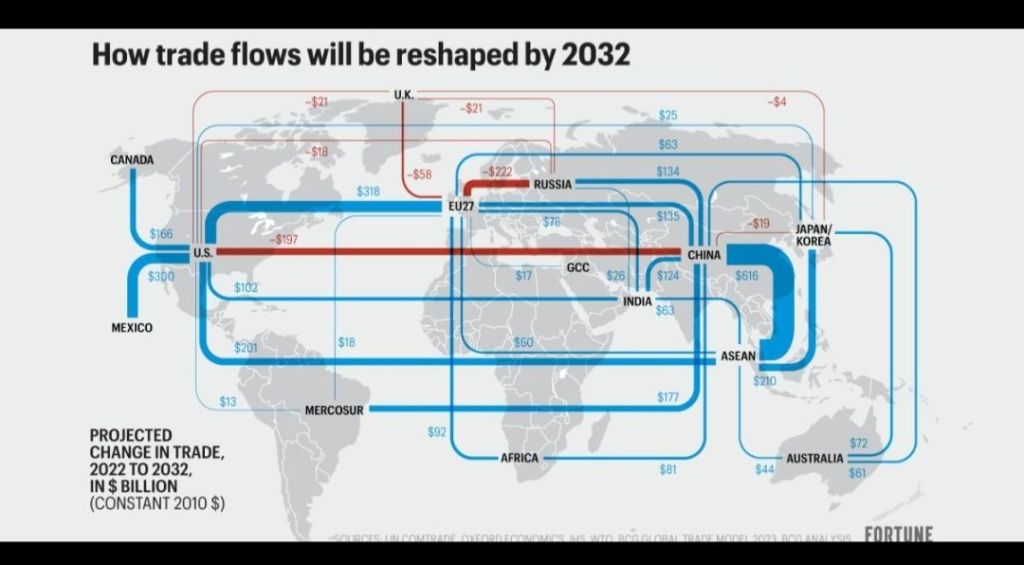
War can alter global economic structures by changing trade alliances and geopolitical power dynamics. It may lead to increased economic nationalism and reduced globalization. Furthermore, developing countries often suffer more due to limited economic resilience, widening global inequality.
6. Discussion
The analysis indicates that war has predominantly negative consequences for the global economy. While certain sectors, such as defense industries, may benefit temporarily, the overall impact includes economic instability, reduced growth, and increased inequality. The interconnected nature of the modern economy amplifies these effects, making even distant conflicts globally significant.
7. Conclusion
War remains a major obstacle to global economic stability and sustainable development. Its impact is multifaceted, affecting trade, inflation, employment, and financial systems. The study concludes that preventing conflicts and promoting international cooperation are essential for maintaining economic stability and reducing inequality.
8. Suggestions and Policy Implications
Strengthening global trade cooperation
Diversifying energy sources
Promoting peace-building initiatives
Enhancing economic resilience in developing countries
Encouraging international financial support mechanisms
9. References
International Monetary Fund (IMF) Reports
World Bank Publications
World Trade Organization (WTO) Reports
United Nations Economic Surveys
Research journals on global economics


Leave a Reply